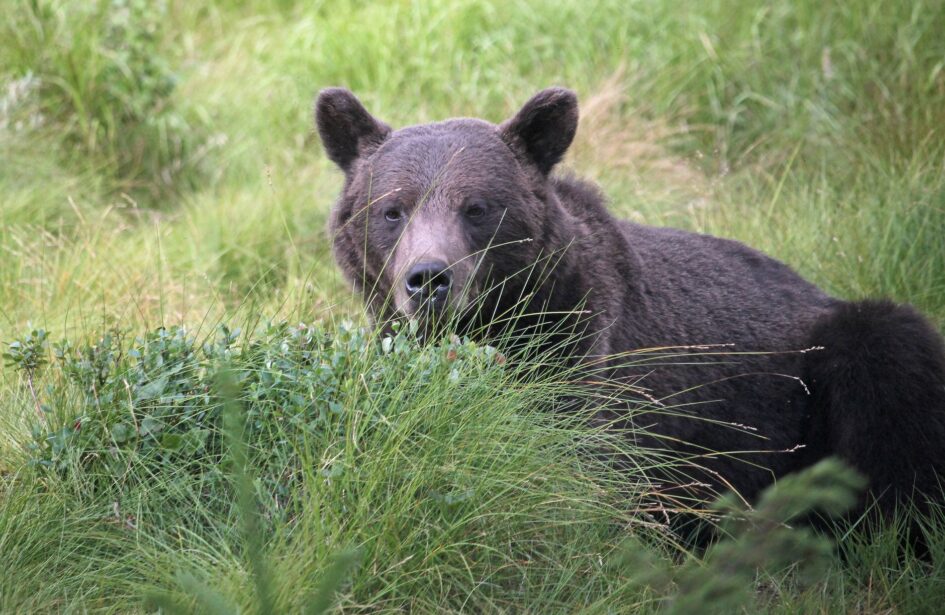
The naturalist leading our hike stopped mid-sentence. “HEY BEARRRRR!!!”
Startled, I tore my gaze from a bright orange mushroom. Thirty feet behind me, perched on a lump of granite, was a black bear.
The naturalist continued her sing-song chant, clapping rhythmically. Along with the other hikers, I jumped into the chorus. Part of me was exasperated with myself—of course I’d left my bear horn at home, thinking that the guided nature walk would be a safe stroll extending no more than a half mile past the visitor center. Of course today would be the day a bear showed up.
The bear tilted his head curiously, perhaps wondering what on earth we were doing.
“HEY BEARRR!!!” We chanted louder.
The bear shifted his weight, leaning back and forth on his paws. He couldn’t make up his mind: were we worth a sniff?
As we shouted and clapped, I craned my head to get a better view. Tucked between the vertical shafts of trees, the furry creature looked awfully cute. But I knew that with the slightest misunderstanding, that Build-A-Bear could unleash some nasty claws.
Finally, he backed up and began ambling up the mountainside. Apparently we were more trouble than we were worth. Following the lead of the naturalist, we took measured steps backward, too.
As we journeyed back to the visitor center, one of my fellow hikers couldn’t stop trembling. We kept asking ourselves: why had the bear been so unfazed by us and our shouting? Most black bears are naturally shy, if curious, creatures. The naturalist explained that there had been a lot of bear sightings here recently, despite this being a popular trail so close to the parking lot and visitor center. The bears were getting used to people…or even more likely, to the food those people left behind.
Encounters like this are becoming more common—not because bears are invading our world, but because our worlds increasingly overlap, particularly in parks like this one. Most of the time, the wildlife and people co-exist peacefully. But sometimes, the boundaries between species can get blurry, and that’s often where the problems begin.
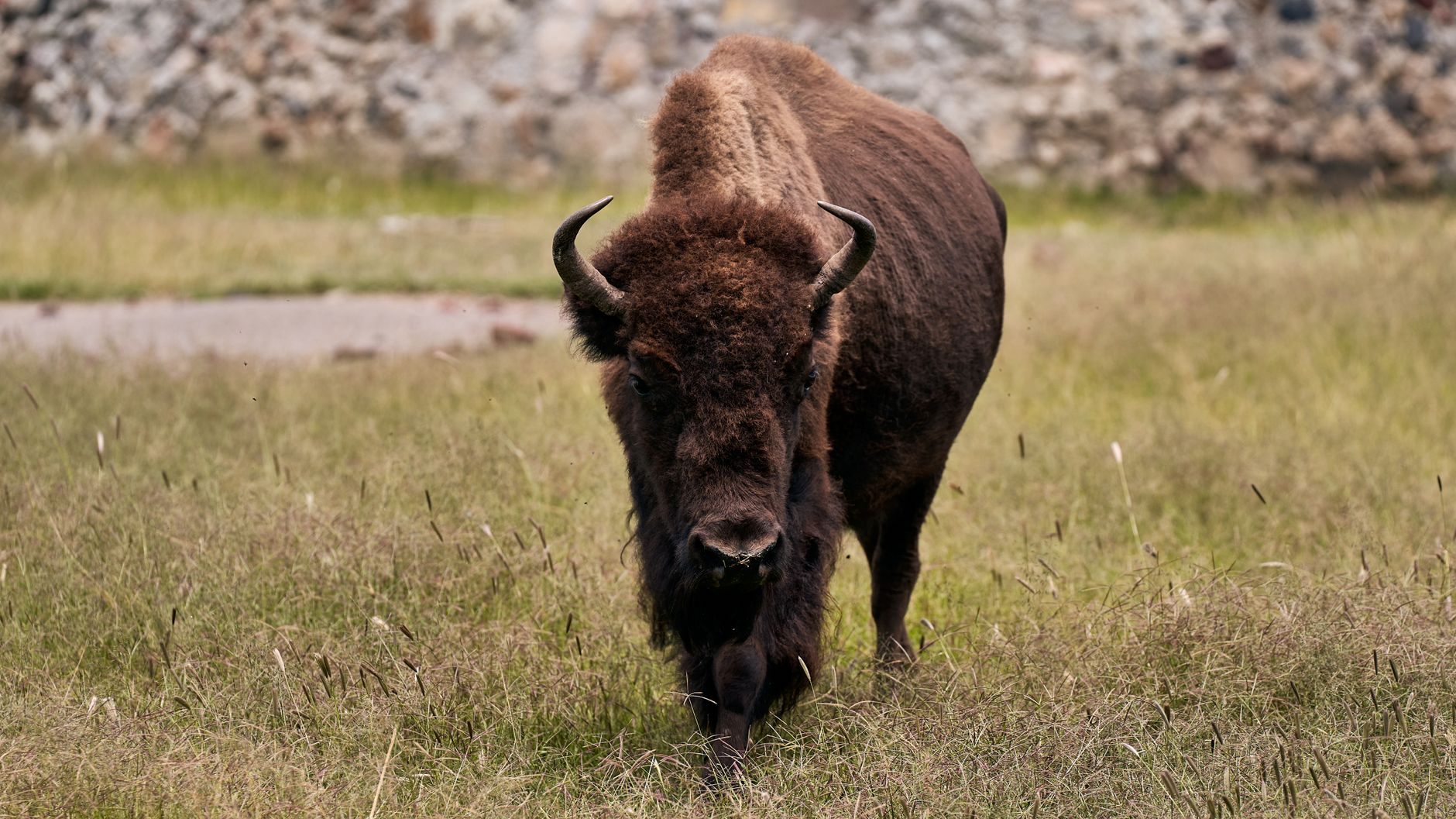
What kind of problems? Think about those viral videos of bison charging people. Think about news stories where people get trampled by moose or mauled by bears.
These tragedies usually don’t happen randomly. Often, they’re the result of people getting too close, directly or indirectly, to wild animals. Sometimes, the overstep is clear, like when someone tries to get a selfie with a bison or pet a fox. Other times, it’s more gradual. My group never approached the bear. In fact, we slowly backed away. But not everyone gives wildlife that same space. Sometimes the problem isn’t getting too close—it starts much earlier, when people leave behind food scraps or intentionally feed wild animals.
Over time, the animals become comfortable around people. This might not sound so bad, but it can cause problems for people and animals alike. For starters, animals can become acclimated to a poor diet of human trash, or even choke on non-food items like wrappers. Some animals might linger near roadways, running the risk for collisions. Meanwhile, frequent interactions between species could create opportunities for diseases to spread from animal to person (or vice versa). And there’s always a risk that a person’s wrong move could inadvertently send a wild animal into defensive mode, potentially leading to violence.
It’s important to remember that when in nature, we are visitors. The wild is home to a diverse range of plants, animals, and fungi, and we have to respect that. We can still share the outdoors, but we have to do it on Mother Nature’s terms. For example, we can:
- Keep a safe distance from wild animals
- Avoid petting or feeding wildlife
- Stay on trails
- Dispose of trash properly
- Leave orphaned or injured animals alone
- Avoid storing food where animals can access it
It’s inevitable that we cross paths with wildlife sometimes; after all, we share a planet. Interactions with wildlife can be special moments for appreciation and wonder. Part of the fun of outdoor activities is that we get to spend time with nature.
Our encounter with the bear ended peacefully, as it should. We kept our distance, the bear kept his, and after a few curious glances he disappeared back into the forest. That’s the goal—not the perfect photo or the closest possible encounter, but a brief moment of awe. Then, with the same spirit of respect, we can go our separate ways, leaving wildlife to be what it naturally is: wild.
Items of Note:
- If you like this post, check out the National Park Service on social media for hilarious tips on staying safe in the wild. It’s one of my favorite examples of using humor for effective science communication.
- I’ve been selected as a Public Health Communications Collaborative Ambassador for All 2026! Follow me on social media to learn more.
Books I’m Reading:
- Moby-Dick
- Project Hail Mary
- Remarkably Bright Creatures
Related: More Than Mud: The Salt Marsh

Leave a Reply